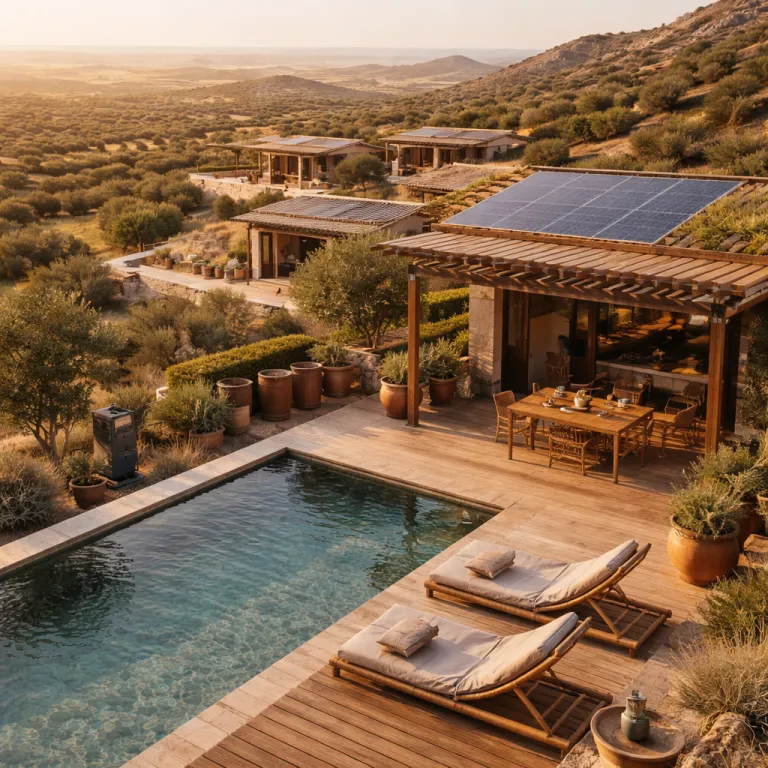
What a genuinely carbon neutral luxury resort looks like
A true carbon neutral luxury resort is not a marketing flourish. It is a hotel or lodge that measures every emission, cuts them aggressively, then offsets the remainder to reach net zero impact. As one expert definition puts it, “A resort that offsets its carbon emissions to achieve net-zero impact.”
For families comparing luxury resorts, the first filter is energy, because running villas with air conditioning and pools on solar power demands serious engineering. Large scale photovoltaic fields, battery storage sized for several cloudy days, and careful management of grey water systems all sit behind the effortless feeling of endless hot water and cool rooms. When a property claims to be eco friendly, ask how much of the resort runs on renewables and how often diesel generators still back up the grid.
Carbon neutral ambitions also reshape the physical resort, from the choice of natural materials to the way villas are oriented for shade and cross ventilation. Architects now treat every private pool, every stretch of landscaped island garden, as part of a wider eco luxury system that must protect marine life and nearby reefs. Families should look for hotels that publish sustainability reports, detail their waste streams, and explain how they reduce single plastics without compromising safety or comfort.
Solar powered villas and the hidden engineering of sustainable luxury
Running a carbon neutral luxury resort on solar power is harder than the sunset photos suggest. Each villa, suite, and private residence draws heavy loads from air conditioning, pumps, and filtered drinking water systems, so battery banks must be sized for peak demand rather than brochure averages. The most advanced eco friendly resorts combine solar arrays with smart building controls, so lighting, fans, and grey water treatment plants respond to real time occupancy.
Properties such as Soneva Fushi in the Maldives show how far this can go, with extensive solar fields, on site glass recycling, and composting that turns food waste into soil for organic gardens. Their model proves that a remote island lodge can offer full luxury while cutting diesel use dramatically, yet even there a backup generator remains for rare cloudy weeks. When you read about sustainability, look for specifics on storage capacity, grid independence, and how the resort handles cloudy monsoon periods without quietly abandoning its eco claims.
Families choosing all inclusive stays increasingly want status by experience, not wristband, and that extends to sustainability credentials. A carbon neutral hotel that explains its energy mix, its use of natural materials, and its partnerships with local communities will usually be more ocean friendly than a property that simply mentions green intentions. Ask whether the resort tracks sustainability KPIs annually, because serious operators treat carbon, water, and waste data with the same discipline as revenue reports.
Three benchmark properties leading the carbon neutral movement
Several pioneering resorts now anchor the conversation around what a carbon neutral luxury resort can be. The Brando in French Polynesia operates solar powered villas on a private island, combining seawater air conditioning with large photovoltaic fields to cut fossil fuel use dramatically. Its model shows how a remote eco luxury reserve can protect marine life while still offering private pools, fine dining, and polished service.
In the Maldives, Soneva Fushi has become shorthand for serious sustainability, with solar generation, a sophisticated zero waste centre, and coral restoration projects that support local reefs. Families staying there see sustainability woven into daily life, from glassware made on site to educational programmes that explain how grey water is treated and reused in gardens. This is where the term eco friendly resorts moves from brochure copy to lived experience, because children can tour the facilities and understand how positive change happens.
On Mexico’s Pacific coast, Playa Viva operates as a B Corp lodge powered entirely by solar, with villas built from natural materials that blend into the landscape. Here, sustainable travel means supporting local communities through employment, education, and regenerative agriculture, not just reusing towels and banning single plastics. For travellers tracking the evolution of all inclusive luxury, these three properties sit alongside new openings such as Bulgari Resort Raa Atoll and thoughtful flagships in Riviera Maya as signals that sustainability is becoming a core measure of excellence.
Beyond the eco label: separating real sustainability from soft marketing
The phrase eco resort now appears across brochures for hotels that still rely heavily on diesel, imported water, and disposable plastics. Families booking a carbon neutral luxury resort need a sharper lens, because the gap between aspiration and engineering can be wide. Start by asking whether the resort has third party certification, publishes emissions data, and explains how it handles waste, from food scraps to construction materials.
Some properties, such as Bucuti & Tara Beach Resort in Aruba or Emirates One&Only Wolgan Valley in Australia, have achieved certified carbon neutrality through a mix of efficiency, renewables, and high quality offsets. Others, including St Raphael Resort & Marina in Cyprus, frame their carbon neutral hotel status around both energy upgrades and careful sourcing of sustainable materials. When a resort claims to be eco friendly, look for clear answers on single plastics, grey water treatment, and how they protect nearby marine life from run off and boat traffic.
Portfolio brands such as Beyond Green now curate friendly resorts that meet strict sustainability criteria, which can help families filter options quickly. Yet even within these collections, each hotel or lodge handles local context differently, from water scarcity to community partnerships. For a family planning a once in a decade trip, it is worth reading beyond the eco label and asking how your stay contributes to positive change rather than simply offsetting emissions elsewhere.
Why islands lead the way, and how families can choose well
Remote islands have quietly become laboratories for the carbon neutral luxury resort model. In French Polynesia and the Maldives, limited grid infrastructure and abundant sun make solar power, battery storage, and seawater cooling more viable than in many urban coastal regions. Resorts on a private island often control their entire energy and water system, which simplifies the path to eco luxury but also concentrates responsibility.
Destinations such as Song Saa Private Island in Cambodia, Bawah Reserve in Indonesia, and Six Senses Yao Noi in Thailand show how island resorts can integrate natural materials, reef conservation, and low impact villas into a coherent sustainability strategy. In Sri Lanka, Bali, and other parts of Southeast Asia, eco friendly lodges are experimenting with rainwater capture, on site treatment of grey water, and strict bans on single plastics to protect fragile marine life. Families who value sustainable travel can use these examples as benchmarks when assessing Caribbean or Mediterranean hotels, where grid constraints and denser development make full carbon neutral operations more complex.
When you compare friendly resorts for a multi generation celebration, treat sustainability as part of the luxury equation rather than an optional extra. Look for properties that support local suppliers, invest in staff training, and invite guests into conservation projects, whether turtle monitoring or reef restoration. For inspiration on refined island stays that balance privacy, service, and sustainability, guides to elevated all inclusive island privileges can help frame the right questions before you commit.
FAQ
What is a carbon neutral resort in practical terms ?
A carbon neutral resort measures all its greenhouse gas emissions, reduces them through efficiency and renewable energy, then offsets the remaining footprint to reach net zero. Many leading resorts use solar panels, energy efficient appliances, and sustainable building materials to cut emissions before turning to offsets. Families should look for transparent reporting and recognised certifications rather than vague green language.
How do luxury resorts usually achieve carbon neutrality ?
Most luxury resorts combine several strategies, starting with energy efficiency upgrades such as LED lighting, modern chillers, and better insulation. They then add renewable energy, typically solar power, sometimes supported by battery storage and smart controls for water and air conditioning. Any remaining emissions are balanced through verified carbon offset programmes that fund projects like reforestation or clean energy elsewhere.
Why should families choose a carbon neutral luxury resort ?
Choosing a carbon neutral luxury resort allows families to enjoy high comfort while reducing the environmental impact of long haul travel. These hotels often lead on broader sustainability issues too, from eliminating single plastics to protecting local marine life and supporting nearby communities. The result is a stay that feels both indulgent and aligned with the values you want to pass to children.
How can travellers verify a resort’s sustainability claims ?
Travellers can start by checking whether the resort holds credible environmental certifications and publishes recent sustainability reports. It is worth asking specific questions about renewable energy use, grey water treatment, waste management, and how the property supports local conservation efforts. Many leading operators invite guests to tour their back of house facilities, which is often the most convincing proof that the systems are real.
Are carbon neutral resorts more expensive than traditional luxury hotels ?
Rates at carbon neutral resorts often sit in the same range as comparable high end hotels in similar destinations. While the initial investment in solar, batteries, and sustainable materials is significant, long term operating savings can help keep pricing competitive. For families, the added value comes from knowing that their stay supports positive change rather than simply adding to global emissions.