The new language of quiet luxury all-inclusive design
Quiet luxury all-inclusive travel is no longer about excess and spectacle. The most interesting inclusive resorts now edit rather than add, proving that “the highest form of luxury can be quiet, hidden, harmonized with nature” — discretion reframed as the new status. For solo explorers, that shift turns the resort from a theme park into a finely tuned instrument for rest, reflection and a more intentional vacation rhythm.
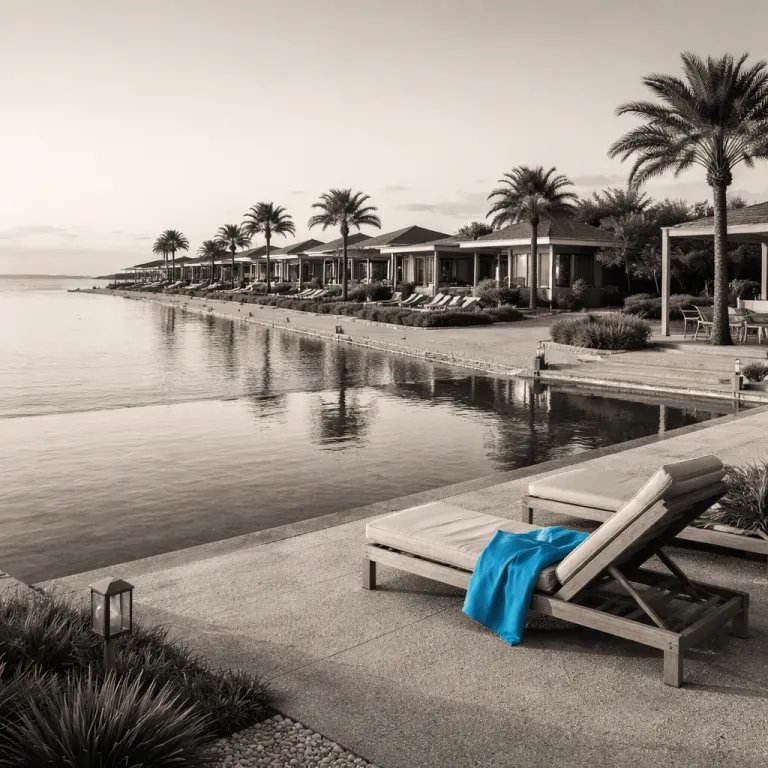
Design is where this restraint becomes visible first, especially in adults-focused properties that prioritise calm over constant entertainment. At Serenity at Coconut Bay in Saint Lucia, for example, the resort spa, suites and private plunge pool decks are arranged so that you hear the trade winds before you hear another guest, and the inclusive philosophy is expressed through space rather than slogans. Across the Caribbean and México, from Montego Bay to the quieter corners of Riviera Maya, architects are lowering sightlines, softening lighting and using natural materials so that the grand gesture is actually the silence between design notes.
Old all-inclusive metrics still shout about the number of restaurants, the size of the main pool and how many activities you can cram into a day. In the better-included era, the more telling question is how many places you can be alone with a book, a view or a thought, whether you are on a private beach in Puerto Vallarta or on a private island in Costa Rica. A refined, low-key resort that understands this will often have fewer rooms, fewer bars and fewer programmed events, yet it will offer more meaningful privacy for adults who value time over spectacle.
Consider Almare, a Luxury Collection All-Inclusive Resort on Isla Mujeres in México, where the inclusive model is tuned for design-minded travelers rather than party seekers. Here the island resort layout uses narrow pathways, layered gardens and carefully framed views of the bay to create a sense of seclusion even when the hotel is near capacity. You feel the same design intelligence at properties such as Grand Velas Los Cabos or the more intimate Velas Boutique concept, where the architecture and interiors are calibrated to slow you down instead of pushing you toward the next scheduled activity.
This move from abundance to restraint is not theoretical; it is visible in new openings that deliberately cap restaurant counts, limit room categories and shrink the entertainment calendar. Industry coverage from Hospitality Net in 2023 and 2024 has highlighted how luxury hospitality is shifting from abundance to restraint, privacy and intention, and you see that in the way resort spa facilities now emphasise long, personalised rituals over crowded hydro circuits. For solo travelers, writers and couples recovering from work burnout, that restraint is not a compromise but the main reason to choose a quieter, design-led all-inclusive stay.
From more included to better included: how to read the offer
The old all-inclusive promise was simple; more was always better. More pools, more buffet restaurants, more bars and more activities signalled value, even if the experience felt like a crowded cruise ship on land. In the emerging quiet-luxury segment, the most sophisticated travelers now read those same signals as red flags rather than reassurance.
When you evaluate inclusive resorts today, the question is not how many restaurants exist but how many are worth a second evening. A resort in Punta Cana or Cap Cana that lists ten dining venues yet repeats the same menu structure is still selling abundance, not quality, while a property in Puerto Vallarta or Riviera Maya with three focused restaurants and a serious chef is firmly in the better-included camp. The same logic applies to spa offerings; a smaller resort spa with a few deeply personalised rituals can feel far more luxurious than a grand facility that processes guests on a tight schedule.
Pricing structures tell their own story, especially for solo explorers who are sensitive to paying for noise they will never use. If a hotel markets itself as family-friendly yet charges a premium for adults-only quiet zones, you are effectively subsidising programming that may not match your vacation style. By contrast, a discreet, upscale property in Costa Rica or on a private island near Montego Bay that includes yoga, guided nature walks and unhurried dining in the base rate is aligning its offers with the restrained, design-led experience you actually want.
Geography also shapes how you should read the inclusive promise, particularly in destinations where the party narrative is strong. In the Dominican Republic, for example, a resort in Punta Cana that advertises constant entertainment, foam parties and late-night shows is clearly targeting a different guest than a low-rise island resort in the same bay that emphasises nature, spa rituals and private cabanas. The same contrast appears in México between high-energy zones near Cancún and quieter enclaves such as Isla Mujeres, where Almare’s adults-oriented model shows how a calm, all-inclusive escape can feel almost like a private island retreat.
For a deeper sense of how to decode these offers in practice, look at how Tamarindo on the Pacific coast has evolved into a more design-conscious, wellness-oriented hub. An elegant guide to choosing an all-inclusive hotel in Tamarindo will often highlight properties that reduce the number of pools and restaurants in favour of better architecture, more generous rooms and a stronger connection to the beach or mangroves. That same editorial lens is now essential whether you are comparing inclusive resorts in Costa Rica, México or the Dominican Republic, because the best experiences are coming from the places that do less yet do it with far more intention.
Where quiet luxury all-inclusive restraint works best
Not every traveler wants restraint, and not every destination rewards it. The understated luxury model shines in places where nature, space and design can carry the experience without constant programming. Think of a hillside retreat above a calm bay rather than a tower block pressed against a busy strip.
Jade Mountain in Saint Lucia is a textbook example, even though it is not a classic wristband property, because its grand open-air sanctuaries, private pools and absence of televisions show how subtraction can feel deeply luxurious. Twin Farms in Vermont and The Resort at Paws Up in Montana follow a similar philosophy in very different landscapes, using inclusive pricing, limited rooms and highly personalised service to create a cocoon for adults who value quiet over spectacle. These properties prove that a resort does not need a long list of activities to justify an inclusive rate when the design, cuisine and sense of place are this strong.
In the Caribbean, Montego Bay, Punta Cana and Cap Cana each host both high-energy and low-key properties, so the design and programming choices matter more than the destination label. A serene, high-end resort spa in Montego Bay might focus on open-air treatment pavilions, a single ocean-facing pool and a handful of restaurants, while a neighbouring hotel leans into water slides, loud music and family-friendly entertainment. For solo explorers, the former offers a chance to reset, write, read and swim without commentary, whereas the latter is better suited to groups who want constant motion.
Across México, the contrast between Puerto Vallarta and Riviera Maya illustrates the same split. In Puerto Vallarta and the wider Bahía de Banderas, properties such as Grand Velas Puerto Vallarta and Grand Velas Los Cabos show how a large resort can still feel intimate when the architecture prioritises sightlines, quiet corners and generous private terraces. On the Caribbean side, some Riviera Maya inclusive resorts still chase scale, yet the most interesting openings are those that reduce room counts, carve out adults-only wings and treat the beach as a sanctuary rather than a stage.
Even in classic sun-and-sand destinations, the island resort model is evolving toward more intentional design. A private island retreat in Costa Rica or off the coast of México might offer only one main restaurant, a small spa and a single grand pool, yet the experience feels richer because every element is tuned to the setting. When you compare this to a crowded bay complex with multiple towers and a confusing map of pools and restaurants, the appeal of the better-included era becomes obvious, especially for travelers who see their vacation as a chance to recalibrate rather than perform.
For readers considering a refined island stay in Europe, the same principles apply in the Mediterranean. A guide to Mallorca hotel all-inclusive escapes for refined island stays will often highlight properties that keep programming light, protect quiet hours and use design to frame the sea rather than compete with it. Whether you are in the Dominican Republic, México or Spain, the modern, low-key all-inclusive experience thrives where the resort trusts the landscape enough to step back.
When restraint goes too far: a solo traveler’s litmus test
Restraint can be a virtue, but it can also be a convenient excuse. Some properties now use the language of quiet luxury all-inclusive travel to justify reduced staffing, limited dining hours or a spa that feels like an afterthought. For a discerning solo traveler, the challenge is to separate intentional minimalism from simple cost cutting.
The first litmus test is service intensity, especially in resort spa and dining venues where quiet should never mean absent. A genuinely thoughtful inclusive resort will offer unhurried yet attentive service in its restaurants, with staff who remember your preferences and adapt pacing to your day, whether you are returning from a long hike in Costa Rica or a slow morning on the beach in Puerto Vallarta. If the hotel leans on self-service kiosks, long waits at the bar and a single overworked therapist for the entire spa, that is not restraint; it is erosion.
The second test is how the property treats solo and adults-only guests in spaces that are nominally family-friendly. In a well-run quiet luxury all-inclusive environment, you should be able to find a calm corner by the pool, a quiet table at breakfast and a stretch of beach where the soundtrack is waves rather than speakers, even if children are present. If every public area is dominated by loud programming and there is no meaningful adults-oriented refuge, the inclusive label is serving families at the expense of everyone else.
Design also reveals when restraint has tipped into neglect. A resort that celebrates minimalism yet leaves corridors under-lit, public areas under-furnished and rooms without comfortable seating is not embracing quiet luxury; it is ignoring guest comfort. By contrast, properties such as Serenity at Coconut Bay, Grand Velas Los Cabos or a carefully curated Velas Boutique address show how fewer decorative gestures can coexist with deeply comfortable beds, generous private terraces and thoughtful lighting that respects both sleep and stargazing.
For solo explorers, a practical checklist helps clarify whether the resort does the least in the right way. Before you book, ask about adults-only zones and quiet hours, spa staffing levels and treatment availability, Wi-Fi strength in rooms and by the pool, the presence of work nooks or in-suite desks, and whether room service or late snacks are included. A quiet luxury all-inclusive stay that pares back entertainment yet invests in strong connectivity, well-designed spaces and genuinely restorative spa rituals can be a perfect base for writing, thinking or simply resetting.
Solo traveler checklist: quick yes/no questions
Can you reserve adults-only areas without extra fees? Are at least two restaurants open for unhurried dinner every night? Does the spa list more than a couple of short, standardised treatments? Is there reliable Wi-Fi in rooms and by the pool? Are there clearly posted quiet hours and non-amplified zones? If you answer “no” to several of these, the resort may be cutting corners rather than curating calm.
When you evaluate inclusive offers in places like Cancún Bay, an elegant guide to choosing a Cancún Bay all-inclusive hotel escape will often steer you toward properties that understand this balance, where the grand gesture is a perfectly timed coffee on your terrace rather than another themed party you never asked for. As the category splits between party-forward and design-led restraint, the best experiences will come from resorts that do less but care more. Status in luxury travel is now measured by experience, purpose and alignment with personal values rather than scale, and quiet luxury all-inclusive properties are where that philosophy becomes tangible. For travelers who value privacy, intention and design, the resort that appears to offer the least on paper may well deliver the most meaningful stay.
Key figures shaping quiet luxury all-inclusive travel
- Recent consumer surveys from major booking platforms, including a 2023 Hotels.com poll, indicate that a substantial share of travelers now prefer adults-only resorts, with several reports citing figures above one-third of respondents — a clear signal that privacy and calm are becoming central to the appeal of quiet luxury all-inclusive stays.
- Industry analyses from Hospitality Net, particularly 2022–2024 coverage of luxury resort development, highlight a marked rise in high-end all-inclusive openings worldwide, with new projects increasingly emphasising restraint, wellness and sustainability rather than sheer scale.
- Travel trend research from Blacklane and Skift, including Skift’s 2023 and 2024 luxury outlook reports, shows that status in luxury travel is shifting toward experiences aligned with personal values, reinforcing demand for inclusive resorts that prioritise design, nature and intention over abundant programming.
Essential questions about quiet luxury all-inclusive resorts
What defines a quiet luxury all-inclusive resort ?
What defines a quiet luxury all-inclusive resort? A resort offering serene, upscale accommodations with comprehensive amenities in a peaceful environment. In practice, that means fewer but better restaurants, a spa focused on personalised rituals, generous private spaces and programming that supports rest rather than constant stimulation.
Are all quiet luxury all-inclusive resorts adults only ?
Are all quiet luxury all-inclusive resorts adults-only? Many are adults-only, but some may accommodate families seeking a tranquil experience. The key is how the property manages zoning, sound and scheduling so that adults who value quiet can still find genuinely calm spaces.
What amenities are typically included in these resorts ?
What amenities are typically included in these resorts? Gourmet dining, private pools, spa services and personalized activities. At the top end, you can also expect thoughtful design, strong wellness programming and inclusive offers that cover more of what you actually use, from non-motorised water sports to curated cultural experiences.
Trusted references for further reading
- Hospitality Net – analyses on evolving luxury and all-inclusive resort trends, including 2022–2024 coverage of wellness-led and design-focused openings.
- Blacklane – luxury travel trend reports on discretion, chauffeur-driven privacy and quiet status signaling among high-end travelers.
- Skift – in-depth coverage of global luxury hotel themes and traveler behaviour, with annual outlooks on how values-driven guests are reshaping the all-inclusive category.