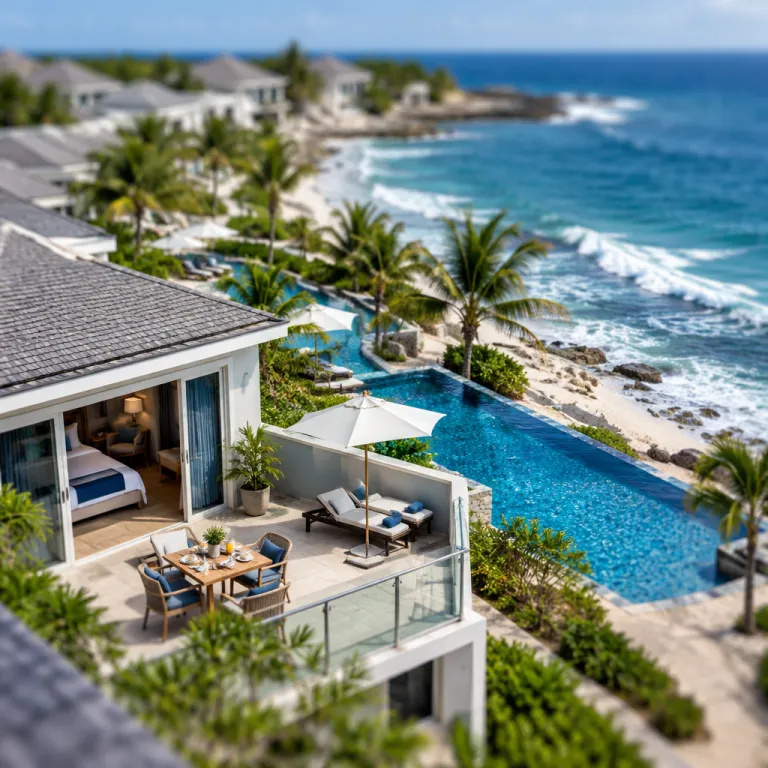
The new winter migration: from one week away to a month-long all-inclusive stay
For many snowbirds, the classic one-week escape no longer feels sufficient. A growing number of couples now treat a long-stay all-inclusive winter getaway as a seasonal migration, stretching their time away from a few days to several weeks. This shift toward extended stays is reshaping how luxury and premium resorts think about value, daily rhythm, and residential comfort.
Travel data on longer trips points in the same direction. Airbnb, for example, reported in its 2022 travel trends update that long-term stays of twenty-eight nights or more nearly doubled as a share of bookings between 2019 and 2021 before settling at a higher baseline than before. Expedia Group has highlighted a sharp rise in demand for properties with inclusive pricing, while several major online travel agencies noted that searches using the all-inclusive filter rose by roughly sixty percent during the restriction era. That pattern aligns with what we see on luxury booking platforms for every extended winter snowbird reservation built around an all-inclusive model.
Analysts link this to remote work, stress reduction, and predictable costs. Research summaries from industry bodies consistently cite remote work, COVID-era uncertainty, and a desire for financial clarity as the main drivers of month-long winter stays. They also emphasize that retirees no longer dominate this trend; remote workers and younger professionals now represent a meaningful share of guests. At the same time, luxury and all-inclusive portfolios have expanded rapidly, which helps explain why couples now find more premium options for a winter snowbird escape than ever before.
Economically, the appeal is straightforward for both retirees and remote workers. A fixed daily rate that is fully inclusive of dining, drinks, and activities limits the à la carte drift that quietly inflates the bill during a traditional hotel stay. When you stretch that model across thirty days inclusive of meals, wellness, and entertainment, the all-inclusive pattern can become more rational than a patchwork of short bookings and separate restaurant bills.
Destinations such as Florida and Mexico sit at the heart of this migration. In central Florida, snowbirds can pair theme park access with coastal day trips, while in Cancun and Los Cabos the beach resort scene offers warm seas and direct flights. Couples weighing a long winter base often compare these hubs against Caribbean islands, balancing flight time, medical access, and the overall feel of the season.
Within Mexico, the contrast between Cancun and Los Cabos is instructive. Cancun tends to suit couples who want a lively beach resort with easy excursions and a social pool scene, while the Cabo region leans toward dramatic desert coastlines and quieter, more architectural properties. Both regions now court snowbirds with extended-stay offers, positioning the all-inclusive resort model as an alternative to renting monthly hotels or serviced apartments.
Florida remains a classic for good reasons. For American snowbirds, central Florida offers familiar healthcare systems, English-speaking staff, and short flights, which matter when you commit to several weeks away. Coastal resorts, especially those with residential-style suites, now compete directly with Caribbean properties for couples who want winter sun without leaving the country.
Luxury booking platforms have responded by surfacing filters for extended stays and longer-stay discounts. On all-inclusive-stay.com, for example, we see couples searching specifically for winter snowbird options with clear information on what is included and which fees count as extras. This transparency around taxes, resort charges, and inclusions is now central to how discerning travelers choose where to spend their winter season.
The economics of a month-long all-inclusive: why predictability wins for snowbirds
When you stretch a holiday to thirty days, the economics change completely. A month-long all-inclusive booking replaces dozens of small daily decisions with one clear rate, which is why stress-free budgeting ranks so highly for this audience. Instead of tracking every cocktail or taxi, couples can focus on how they want to use their time.
Traditional hotels often lure guests with an attractive nightly rate, then add layers of fees and variable costs. Over a long stay, resort charges, à la carte dining, and service fees can quietly erode any initial saving you thought you had secured. With a well-structured winter snowbird package built on an inclusive model, most of that volatility is absorbed into a single predictable figure.
For snowbirds who stay for ten days or even eighteen days leading into the peak winter season, the math becomes even more compelling. Many resorts now publish weekly and monthly rates that reward longer stays, especially when you travel just before the highest-demand period. A couple who commits to an early-season escape often benefits from softer prices and a calmer property.
Taxes and resort charges are another crucial layer. In Mexico and Florida, local taxes can add a noticeable percentage to the bill if they are not clearly stated, which is why serious travelers scrutinize whether taxes, fees, and service charges are fully included. When a resort structures its offer so that the main extras are bundled, the guest can calculate the true cost of a winter-long trip with far more confidence.
Some premium properties now highlight inclusive savings structures specifically for extended-stay guests. These might take the form of a reduced daily rate after a certain number of nights inclusive of all meals, or complimentary laundry and spa access once you cross a monthly threshold. For couples planning a multiweek escape, these details can mean the difference between a comfortable budget and constant mental arithmetic.
There is also the question of opportunity cost. Remote workers who relocate for a month often compare the total cost of an all-inclusive resort against renting an apartment, eating out daily, and paying separately for co-working and fitness. Once you factor in airport transfers, gym memberships, and the inevitable restaurant splurges, the bundled model can look surprisingly efficient.
Timing matters as well. Booking a resort stay in November rather than waiting for peak holiday dates can unlock better monthly rates, especially in destinations like Cancun and Cabo where demand spikes sharply. Articles such as the October-focused Mediterranean analysis on softer shoulder-season value show how traveling just before the rush can deliver sharper pricing, and the same logic applies to winter snowbird escapes in the Americas.
Of course, the inclusive model is not always the most economical choice. If you rarely drink, prefer simple breakfasts, and plan to spend most days away from the property, a serviced apartment or monthly hotel arrangement might beat even an excellent resort rate. The key is to map your real habits against what the property includes, rather than assuming that more inclusions automatically mean better value.
For couples who enjoy slow mornings, poolside lunches, and a mix of on-site and nearby activities, the calculus often tilts back toward the resort. Over thirty days, the ability to walk into any restaurant on property without checking prices can feel like a genuine luxury, not a gimmick. That psychological ease is part of why the snowbird pattern continues to grow among both retirees and remote professionals.
Designing for longer stays: suites, workspaces, and residential comfort
A resort that dazzles for five nights can feel repetitive by day twelve if it was never designed for longer stays. The new generation of luxury properties courting winter snowbirds understands this and quietly borrows from serviced residences. Layouts, amenities, and programming now reflect the reality of couples who live on property for weeks at a time.
The most obvious shift is in accommodation. Standard rooms are giving way to larger suites with kitchenettes, dining nooks, and proper wardrobes, which better suit an extended stay or even a full monthly visit. For a multiweek escape, being able to prepare a simple breakfast or store a week of groceries can make the difference between feeling like a guest and feeling at home.
Workspace is another frontier. Remote workers who join the snowbirds for longer stays need reliable Wi‑Fi, ergonomic seating, and quiet zones where calls will not disturb honeymooners. Before committing to a month-long booking, couples should verify upload speeds, backup connectivity, and whether the resort offers semi-private work lounges rather than just a lobby table.
Properties that take this segment seriously also rethink circulation and access. Easy access to laundry, either in suites or via efficient service, becomes non-negotiable for guests who pack for a month. So does intuitive access to fitness facilities, walking paths, and quiet corners where you can read without the soundtrack of the main pool.
Some resorts experiment with hybrid models that blend all-inclusive ease with villa-style privacy. Private island concepts, such as those explored in analyses of highly personalized villas with dedicated chefs, show how far the format can stretch when each residence feels like its own address. While not every winter traveler will choose that level of seclusion, the principles of space, autonomy, and tailored service filter down to more accessible properties.
In Mexico, the Solaris Lighthouse concept illustrates another direction. Resorts inspired by this style of thinking emphasize clear sightlines, intuitive wayfinding, and layered public spaces that support both social and private moments during a long stay. When you live on property for weeks, these subtle design choices matter more than a dramatic lobby that impresses only on arrival.
Caribbean destinations are also refining their offer for longer visits. On islands like Saint Martin and Saint Maarten, elevated all-inclusive hotels now compete directly with luxury condos for the snowbird guest, as seen in reviews of refined properties in St Maarten. The best of these resorts balance restaurant quality that can sustain a month with the kind of residential comfort that makes unpacking for thirty days feel natural.
For couples evaluating options, the checklist is simple but unforgiving. Look for suites with real seating, blackout curtains, and storage; verify whether the resort supports weekly housekeeping preferences rather than insisting on daily service; and ask how the property adapts programming for longer stays. A resort that can articulate its plan for guests staying several weeks is far more likely to deliver a satisfying season.
Keeping thirty days fresh: rhythm, routine, and when all-inclusive stops working
The biggest fear many couples voice about a month in one resort is monotony. They worry that the same restaurants, the same pool, and the same entertainment will blur into a single long day. The reality is more nuanced and depends heavily on how the property structures its rhythm.
Resorts that succeed with longer stays think in weeks, not days. They design rotating menus, themed evenings, and low-key cultural programming that unfolds over ten or eighteen days, so that a guest on a winter escape experiences a gentle narrative rather than a loop. When the calendar resets every seven days with new activities, a month feels like four distinct chapters.
For snowbirds, routine is part of the appeal. Many couples on extended stays settle into a pattern of morning swims, late breakfasts, a few hours of work, and unhurried dinners, punctuated by occasional excursions. The resort’s role is to support that routine with enough variety that it never feels like a cafeteria line with palm trees.
Beach access plays a central role in this. A beach resort with varied zones, from quiet coves to more social stretches, gives long-stay guests the ability to change the mood without leaving the property. Over thirty days, that flexibility matters more than a single iconic viewpoint that photographs well but offers only one way to inhabit it.
There are limits to the model, and it is important to acknowledge them. If you are an intensely independent traveler who prefers to self-cater, explore local markets daily, and change neighborhoods every few days, a month in one all-inclusive may feel constraining by week three. In such cases, a serviced apartment or flexible monthly hotel arrangement, perhaps combined with a shorter resort stay in November, can deliver better alignment with your habits.
Some couples also find that the inclusive model encourages overconsumption. When every drink and dessert is technically included, the temptation to overindulge can undermine the restorative potential of a winter escape. The most thoughtful resorts counter this by emphasizing wellness, offering strong non-alcoholic options, and programming activities that celebrate the destination beyond the bar.
Slow-travel advocates argue that the real luxury lies in depth rather than spectacle. Applied to a month in the sun, that means using the resort as a base for meaningful engagement with the surrounding region, not as a cocoon that replaces it. Day trips, language lessons, and partnerships with local guides can transform a month from a blur of pool days into a season of genuine connection.
Ultimately, the inclusive model works best for longer stays when it respects the guest’s need for both structure and freedom. A resort that can flex between quiet weeks and more active ones, that can support remote work as gracefully as pure leisure, and that understands the psychology of snowbirds will keep couples returning each winter. When those elements are missing, even the most lavish property can start to feel small by day fifteen.
Choosing your winter base: Florida, Mexico, and the new snowbird map
Where you choose to spend the winter shapes everything from your daily routine to your healthcare options. For American couples, the decision often narrows to Florida versus Mexico, with the Caribbean and Central America as nuanced alternatives. Each region offers distinct trade-offs in culture, cost, and connectivity.
Florida’s appeal is built on familiarity and access. Central Florida combines theme parks, golf, and day-trip access to both coasts, which suits snowbirds who want variety without long transfers. Coastal areas offer classic beach resort experiences where a multiweek booking can feel like an upgraded version of the traditional condo rental.
Mexico, by contrast, offers a different cultural and culinary palette. In Cancun, couples on an extended winter stay can pair white-sand beaches with a restaurant scene that now rivals many American cities, while still enjoying competitive monthly rates. Further west, Cabo and the broader Los Cabos region deliver dramatic Pacific sunsets, desert landscapes, and a slightly drier climate that many snowbirds prefer.
Within these destinations, the choice between a pure resort and more flexible monthly hotels is critical. A couple planning a season away might start with a resort booking in November to decompress, then shift to a serviced apartment for the remainder of their stay. Others do the reverse, using a month in an apartment followed by a shorter all-inclusive reset before flying home.
Weather patterns and crowd levels also influence the decision. Booking for early October or early November days in Florida or Mexico can mean fewer families, softer light, and more attentive service, which suits couples who value calm over spectacle. As the season progresses, snowbirds must balance their preferred climate against rising demand and prices.
Healthcare and infrastructure should never be an afterthought. Florida offers the reassurance of domestic insurance networks and familiar hospitals, which is why many retirees choose a winter base there. Mexico’s major resort areas, including Cancun and Los Cabos, now feature well-regarded private clinics and international pharmacies, but couples should still verify coverage and proximity before committing to longer stays.
Finally, consider how each destination aligns with your travel identity. If you want to practice Spanish, explore regional cuisine, and accept a degree of cultural friction, a season in Mexico will likely feel richer. If you prioritize ease, short flights, and minimal language barriers, Florida may remain the more comfortable choice for your extended stay.
How to book a month-long all-inclusive wisely: contracts, clauses, and quiet savings
Securing a long winter booking is closer to arranging a seasonal rental than clicking a weekend rate. The stakes are higher, the contracts more complex, and the potential for both value and disappointment greater. A methodical approach to research and negotiation pays off.
Start by clarifying exactly what the rate includes. Ask whether taxes, fees, service charges, and resort charges are fully bundled, or whether certain extras such as premium spirits, à la carte restaurants, or spa access carry supplements. For a thirty-day stay, even small daily surcharges can compound into a significant sum.
Next, interrogate the rate structure. Many resorts quietly offer better monthly pricing or weekly discounts for longer stays, especially outside the absolute peak of the winter season. Do not hesitate to ask whether your dates qualify for extended-stay rates, loyalty benefits, or inclusive savings that are not visible on public sites.
Accommodation type deserves equal scrutiny. Suites with kitchenettes, laundry access, and separate living areas are worth a premium for a month-long trip, because they reduce the need for external services. When comparing options, factor in the cost of doing laundry off-site or eating every meal in a restaurant if the room lacks basic facilities.
Remote workers should treat connectivity as non-negotiable. Before confirming a reservation, request recent speed tests, ask whether the resort has redundant connections, and clarify where the strongest signals are located. A beautiful beach resort is of limited use if you cannot reliably join a video call from your suite during business hours.
Finally, think about flexibility and cancellation. Life happens, and snowbirds planning a season away should understand penalties for early departure, date changes, or medical emergencies. Some couples choose to split their time between two properties, accepting slightly higher nightly rates in exchange for the psychological comfort of not being locked into a single resort for the entire winter.
Handled thoughtfully, the booking process becomes part of the pleasure. You are not just reserving a room; you are curating the backdrop to a month of your life, whether in Florida, Cancun, Cabo, or another warm coastline. When the contract aligns with your habits and expectations, a winter-long all-inclusive escape can feel less like a holiday and more like a temporary, sunlit address.
FAQ
Are long winter stays mostly popular with retirees?
Retirees and classic snowbirds remain a core audience for extended winter stays, but they are no longer alone. Remote workers and digital nomads now represent a significant share of month-long trips, using flexible jobs to relocate to Florida, Mexico, and other warm destinations. Research on travel behavior from major booking platforms confirms that both retirees and remote professionals contribute to the growth in longer stays.
What drove the growth in month-long winter all-inclusive stays?
Several forces converged to boost the trend. Remote work made it possible to relocate for weeks at a time, while health concerns and travel restrictions pushed travelers toward predictable, low-stress environments. The expansion of luxury and upper-upscale all-inclusive portfolios then provided the quality level that discerning couples expect for a month-long stay.
How do I compare an all-inclusive month to renting an apartment?
To compare a resort booking with an apartment rental, calculate the full cost of each option. For the apartment, include rent, utilities, groceries, dining out, transport, co-working, and gym access; for the resort, ensure that taxes, fees, service charges, and most activities are included. Once you map your real habits against each model, the better value usually becomes clear.
What should remote workers check before booking a month-long resort stay?
Remote workers considering a winter base in a resort should verify Wi‑Fi speeds, backup connectivity, and the availability of quiet workspaces. It is also wise to confirm time-zone compatibility with colleagues, access to printing or meeting rooms if needed, and the resort’s policy on video calls in public areas. These details determine whether a beautiful property can function as a practical base for extended work and travel.
When does a serviced residence beat an all-inclusive for long stays?
A serviced residence or monthly hotel arrangement can outperform an all-inclusive booking when you prefer to self-cater, explore local restaurants, and spend most days away from the property. Travelers who drink little alcohol, value kitchen access, and enjoy shopping at markets often find that a residence model offers better alignment with their lifestyle. In such cases, a hybrid approach that combines a shorter resort stay with a longer apartment rental can deliver both variety and value.