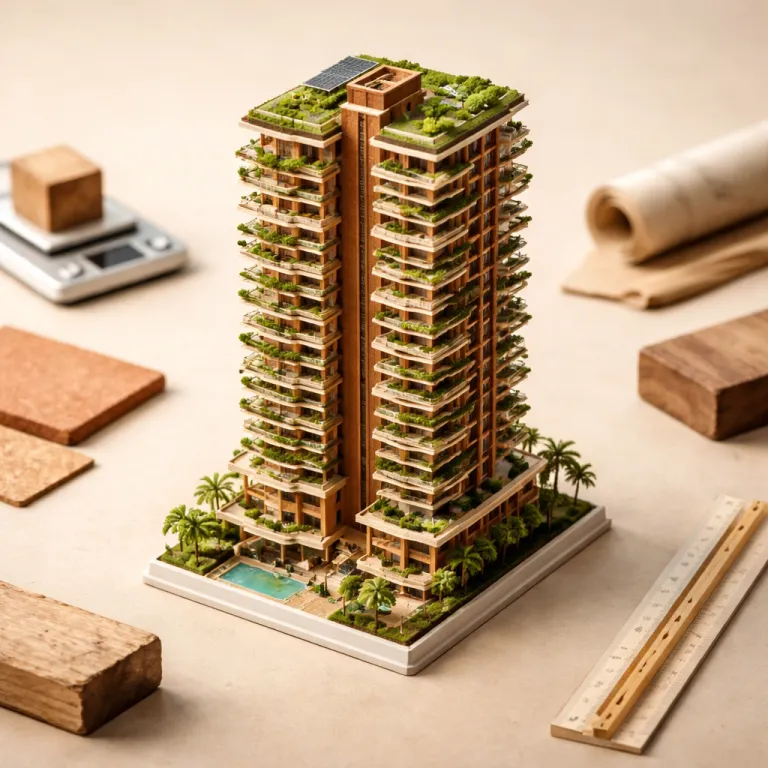
Why sustainable all-inclusive vertical design is rewriting the resort rulebook
Luxury all inclusive resorts are quietly shifting from sprawl to height. The new language is sustainable all-inclusive vertical design, where one high rise building replaces dozens of low villas without sacrificing privacy. This compact approach compresses the footprint in fragile urban areas and coastal cities, leaving more green spaces and shorelines untouched.
Architects and operators now treat the resort as a smart urban micro city, not an isolated compound. Instead of scattering buildings across dunes or mangroves, they concentrate residential and commercial floors in a single tower inspired by vertical forests, then wrap it in terraces, pools and shaded decks. The result is a compact building that protects air quality, reduces energy demand and keeps the landscape largely intact for long term sustainable development.
For travelers, the shift feels subtle yet powerful. You still arrive at a serene lobby, but the elevators carry you through a living façade of trees and plants, echoing the Bosco Verticale concept that transformed Milan into a global reference. This is sustainable design you can see in real time, not just a line in the brochure, and it changes how you read the environmental economic story behind your stay.
Reading the carbon math: from primary energy loads to real sustainability
Once you start looking, the carbon math of an all inclusive resort becomes surprisingly legible. A genuinely sustainable all-inclusive vertical design begins with the primary energy load of the building, then layers solar, wind and passive design strategies to cut demand before buying offsets. As one research summary on compact high rise resorts puts it with disarming clarity: "How does vertical design enhance sustainability?" and the answer is equally direct: "Reduces land use and promotes energy efficiency."
Firms such as OBMI, often in collaboration with institutions like Rensselaer Polytechnic Institute, now model energy flows in real time before a single concrete pour. In recent concept studies for Caribbean all inclusive properties, OBMI and RPI documented modeled energy savings of 25–40% compared with conventional low rise sprawl, largely through optimized massing and shading. They use energy modeling software to test how mass timber structures, cross ventilation and façade screening will perform across seasons, then refine the tower profile to trim every unnecessary kilowatt. This is where smart technologies and integrated building systems step in, from occupancy sensors in corridors to AI tuned chillers that respond to actual guest living patterns rather than static schedules.
For you as a guest, the most practical filter is certification. Labels such as B Corp, Green Globe and EarthCheck act as a floor, not a finish line, because they require evidence of environmentally friendly operations, sustainable development planning and transparent reporting on water, waste and energy. To understand how these certifications work inside all inclusive resorts, read the in depth guide to sustainability certifications that actually mean something at an all inclusive, then compare how different properties talk about their environmental economic performance beyond the marketing copy.
Vertical-build economics: one tower versus sixty villas
The economic logic behind sustainable all-inclusive vertical design is as compelling as the ethics. One carefully planned twelve storey high rise can replace a sprawl of sixty bungalows, cutting the land take by more than half while keeping every suite oriented toward light, views and prevailing breezes. In a typical coastal scenario, a single tower on 8,000 square metres can host the same key count that would otherwise consume 18,000–20,000 square metres of land. That single building concentrates services, staff movement and back of house logistics, which slashes both operating energy and long term maintenance costs.
In dense urban areas such as Vienna’s Seestadt Aspern district or the new waterfront quarters of Milan, compact resort towers behave like urban design laboratories. Instead of duplicating laundries, kitchens and spas across multiple buildings, operators stack these functions, then run them with shared smart technologies that monitor water and heat flows in real time. The result is a tighter environmental economic loop, where waste heat from one activity can support another, and where greywater from guest floors is treated and reused for irrigating trees and green spaces around the tower.
For travelers, this compact resort concept translates into quieter paths, shorter internal journeys and more landscape left wild. You walk through gardens rather than parking lots, because cars and logistics are pushed below grade or to the edge of the site. When you compare options on a premium booking platform, look for site plans that show a single main building with layered terraces and planted roofs, rather than a scatter of low rise blocks that chew up every meter of coastline.
Architecture as sustainability statement: from Bosco Verticale to all-inclusive towers
Some of the most interesting all inclusive projects now borrow directly from the language of Stefano Boeri’s Bosco Verticale in Milan. Those residential and commercial towers, wrapped in thousands of trees and shrubs, proved that a vertical forest could clean air, buffer noise and improve urban living without sacrificing density. Post occupancy studies on Bosco Verticale reported particulate reductions of up to 30% on planted façades and measurable cooling of surrounding microclimates. The same thinking is now migrating to resort design, where façades carry layered planting, and balconies become miniature gardens rather than bare concrete slabs.
In practice, this means a sustainable all-inclusive vertical design might feature stacked sky gardens every three floors, each one acting as a communal green room for guests. These planted terraces cool the building envelope, improve air quality and create shaded outdoor lounges that reduce the need for energy hungry indoor spaces. Over time, the trees and shrubs become part of the resort’s identity, much like the Milan towers, and guests begin to understand that the architecture itself is a living environmental system.
Watch how leading brands handle this architectural storytelling. Six Senses and Anantara often integrate local species into their vertical forest inspired façades, while Habitas experiments with mass timber and prefabricated modules to minimize embodied carbon in new buildings. When you see a tower that feels like a living cliff of green rather than a glass monolith, you are looking at sustainable design that treats the building as habitat, not just a container for rooms.
How to read a resort’s footprint: materials, water and the public-private edge
Material sourcing is where sustainable all-inclusive vertical design either holds its nerve or quietly dilutes its promise. The most serious projects commit to drawing stone, timber and finishes from within roughly 100 kilometres of the site, which anchors the design language in local geology and craft. When a resort in an alpine city uses mass timber from nearby forests and lime plaster from regional quarries, the building feels rooted, and the environmental economic cost of transport falls sharply.
Water and waste streams are the next frontier that guests are finally starting to question. Ask where the laundry effluent goes, how the spa handles greywater and whether the kitchens separate organic waste for composting or biogas, because these flows define whether a property is genuinely environmentally friendly over the long term. Smart metering now allows operators to track these systems in real time, and the best will share high level data with guests, turning invisible infrastructure into part of the story rather than something hidden behind service doors.
The final piece is how the resort negotiates its public private boundary. Vertical resorts in or near cities can open ground floor green spaces, cafés and cultural rooms to local residents, turning the building into a small urban hub instead of a sealed enclave. When you evaluate properties on a curated platform, look for language about community access, local employment and shared amenities, because these signals often align with deeper commitments to sustainable development and thoughtful urban design.
Where architecture and all-inclusive value align: a watchlist for design-led stays
For travelers who care about both design and value, a handful of all inclusive brands are already engineering sustainability into the architecture rather than treating it as a spa add on. Six Senses properties in Asia and the Middle East, for example, often combine high rise or mid rise clusters with extensive green roofs, on site organic gardens and carefully modeled passive cooling strategies. At one recent 200 key coastal project, a compact tower layout and high performance envelope helped cut modeled cooling loads by roughly 30% compared with a baseline low rise scheme. Anantara’s newer coastal resorts lean into compact vertical buildings that preserve dunes and mangroves, then invest in energy systems that prioritize solar and efficient heat recovery.
Habitas takes a different path, using prefabricated modules and mass timber to reduce construction waste and shorten on site building time, which limits disruption to fragile landscapes. Early project data from Habitas sites indicates construction waste reductions of around 50% compared with conventional methods, alongside lower embodied carbon in primary structures. Select Park Hyatt resorts in urban areas experiment with sustainable all-inclusive vertical design by pairing glass and steel towers with deep overhangs, triple glazing and smart façade technologies that cut cooling loads without sacrificing city views. In each case, the architecture is doing the heavy lifting, while the all inclusive model simply wraps food, wellness and experiences around a low carbon core.
If you want a practical starting point, focus on three filters when browsing a premium booking site. First, look for a single main building with layered terraces and visible green spaces rather than endless rows of villas. Second, read how the property explains its energy, water and waste systems, then cross check that narrative against independent certification. Third, use curated guides such as this elegant guide to choosing an all inclusive hotel in Tamarindo to benchmark how clearly a resort articulates its sustainable design choices compared with its peers.
FAQ
How does a vertical all-inclusive resort reduce environmental impact compared with a spread-out property ?
A vertical all inclusive resort concentrates rooms and services in one compact building, which reduces land use and preserves more natural habitat. Shared systems for energy, water and waste become easier to manage efficiently when they serve a single high rise rather than many scattered structures. This concentration usually lowers both operational emissions and long term maintenance impacts.
What should I look for to judge if a resort’s sustainability is more than marketing ?
Start with independent certifications such as B Corp, Green Globe or EarthCheck, which require audited data on energy, water and waste. Then read how the resort explains its architecture, materials and green spaces, checking for specific details rather than vague wellness language. Properties that share clear information about their systems and community relationships tend to be more trustworthy than those relying on generic eco friendly claims.
Why are materials like mass timber important in sustainable resort design ?
Mass timber is an engineered wood product that can replace concrete or steel in many structural elements, often with a lower carbon footprint. When sourced from responsibly managed forests near the site, it reduces transport emissions and supports regional economies. In vertical resorts, mass timber can also improve indoor comfort and aesthetics, making the building feel warmer and more connected to its landscape.
How can I tell if a resort manages water and waste responsibly ?
Look for clear statements about greywater treatment, reuse for irrigation and separation of organic waste from general trash. Some properties publish high level data on water savings or recycling rates, which shows they track performance in real time rather than relying on one off initiatives. If information is scarce or overly vague, the resort may not be prioritizing these systems as part of its core sustainable design.
Are urban all-inclusive resorts compatible with sustainable travel ?
Urban all inclusive resorts can be surprisingly sustainable when they use compact vertical design, efficient public transport access and shared green spaces. Staying in a city tower that integrates renewable energy, smart building technologies and community amenities can reduce the need for long transfers and private car use. The key is choosing properties that treat their urban location as a chance to support local life rather than retreat from it.